Kalash Tours
No golden tombs, no fancy ziggurats. Four thousand years ago city builders in the Indus Valley made deals, not war, and created a stable, peaceful, and prosperous culture.”
The railway linking Lahore to Multan in Pakistan is 4,600 years old. In truth, the rails were laid down in the middle of the nineteenth century, but to build the railway bed, British engineers smashed bricks from crumbling buildings and rubble heaps in a town called Harappa, halfway between the two cities. Back in 1856, Alexander Cunningham, director of the newly formed Archeological Survey of British India, thought the brick ruins were all related to nearby seventh-century Buddhist temples. Local legend told a different story: the brick mounds were the remnants of an ancient city, destroyed when its king committed incest with his niece. Neither Cunningham nor the locals were entirely correct. In small, desultory excavations a few years later, Cunningham found no temples or traces of kings, incestuous or otherwise. Instead he reported the recovery of some pottery, carved shell, and a badly damaged seal depicting a one-horned animal, bearing an inscription in an unfamiliar writing.
That seal was a mark of one of the world’s great ancient civilizations, but mid-nineteenth-century archaeologists like Cunningham knew nothing about it. The Vedas, the oldest texts of south Asia, dating from some 3,500 years ago, made no mention of it, nor did the Bible. No pyramids or burial mounds marked the area as the site of an ancient power. Yet, 4,600 years ago, at the same time as the early civilizations of Mesopotamia and Egypt, great cities arose along the flood plains of the ancient Indus and Sara Swati rivers in what is now Pakistan and northwest India. The people of the Indus Valley didn’t build towering monuments, bury their riches along with their dead, or fight legendary and bloody battles. They didn’t have a mighty army or a divine emperor. Yet they were a highly organized and stupendously successful civilization. They built some of the world’s first planned cities, created one of the world’s first written languages, and thrived in an area twice the size of Egypt and Mesopotamia for 700 years.Sp let’s see the great Alaxander foot step ,
| Days | Activties |
| 1 | Arrive Islamabad and transfer to the hotel for overnight |
| 2 | Flight to Chitral, after short sightseeing drive to Bamboret, Largest among the three Kalash villages. Overnight at Hotel |
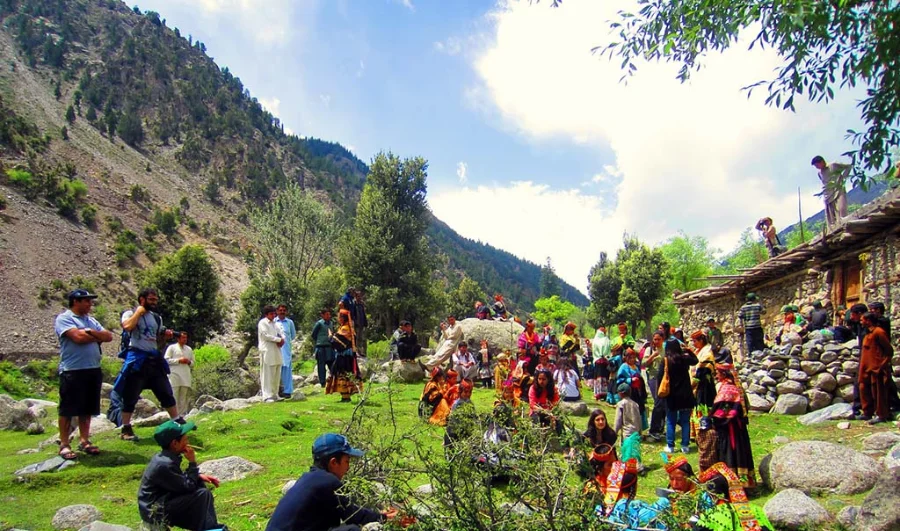
| 3 | Visit villages of Kalash, the black robed people, known as the descendants of Alexander’s legions who entered into the Indo sub-continent through these remote valleys |
| 4 | Swat Drive to Swat, through the Lowery pass and upon arrival at Saidu Sharif, the capital of Swat Valley transfer to the hotel. |
| 5 | Swat Excursion to Madyan-Bahrain. Afternoon visit remains of But Kara and Swat museum. Overnight at hotel |
| 6 | Jhelum Drive on the Grand Trunk road to Jhelum, where the battle of Hydaspes (River Jhelum) was fought between Alexander’s army and Raja Pours. Overnight at hotel |
| 7 | Lahore Visit Rohtas Fort and drive to Lahore. Afternoon visit, Lahore Museum, Fort and Badshahi mosque. Overnight at hotel |
| 8 | Multan Drive to Multan, where one of the last battles were fought and a poisoned arrow struck Alexander, making him sick and eventually lead to his death. Sightseeing and overnight at hotel. |
| 9 | Sukkur Continue driving along the Indus to Sukkur and overnight |
| 10 | Hyderabad Drive to Mohenjo-Daro, visit site and museum. Later continue drive on the Indus highway to Hyderabad. Overnight at hotel |
| 11 | Karachi Drive to Karachi, visit world’s largest necropolis at Makli Hills and Shahjehan mosque at Thatta. Arrive Karachi and overnight at hotel |
| 13 | Gawadar Excursion to Jiwani along the scenic coastal line near the Iranian border and visit the town of Ganz |
| 14 | Karachi Flight to Karachi and sightseeing including Dhobi Ghatt, Clifton beach. Later transfer to the airport for return flight. |
Include in service:
1. Accommodation as per the list provided.
2. Private Air Conditioned transport and 4×4 Jeeps
3. Meals, breakfast, lunch, Dinner in hotels.
4. Entrance fees to museum and sites during Tour.
5. English Speaking Guide services.
6. Tips at hotel and airport.
Not include in service:
1. International airfares.
2. Personal insurance.
3. Tips for staff and porters.
4. Extras at hotels, like drinks, laundry, personal phone calls, etc.
5. Anything which is not mentioned at above given programmed.
Related Tours
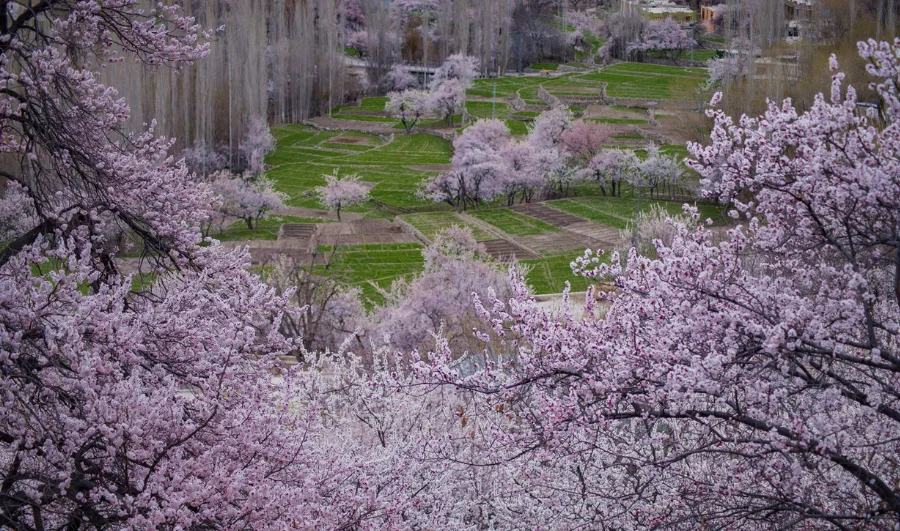
SKARDU VALLEY BLOSSOM TOURS
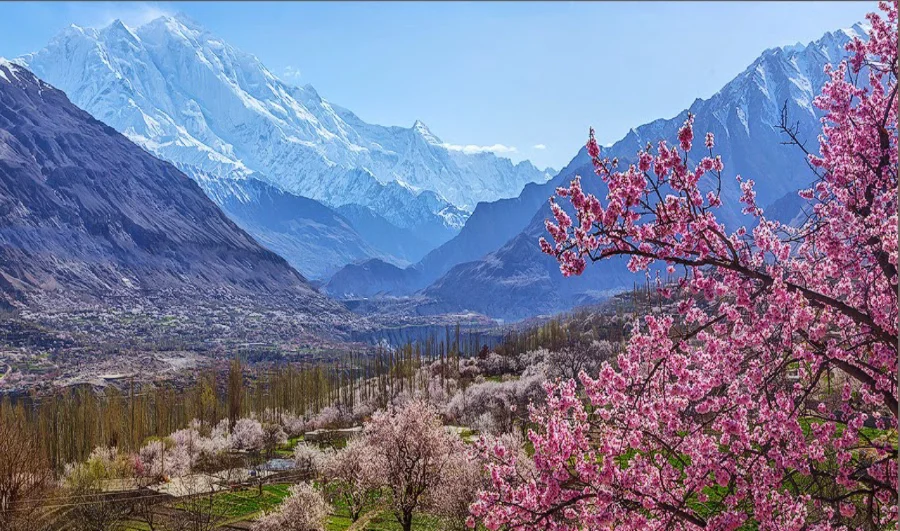
HUNZA VALLEY BLOSSOM TOURS
The most exciting season in the Hunza Pakistan is the spring season: Nature stays longer with its beauty, without any comparison, when this is a blossom in the unbelievable area of God-given natural beauty, you can imagine, how it will be the contrast.